Center for Causal Consequences of Variation (CCV)

An NHGRI Center for Excellence in Genomic Science


Principal investigator

Professor George M. Church

Harvard Medical School


Co-investigators


Dr. George Q. Daley

Childrens’ Hospital


Dr. J. Keith Joung

Massachusetts General Hospital


Professor Kun Zhang

University of California at San Diego


Information about CCV


·         Publications & other CCV news

·         How CCV supports NIH goals

·         Our four Specific Aims

·         Text of our grant proposal

·         Our investigators

·         Our commitment to diversity

§  summer internships!

·         Our history

·         Contact for further information


·         Internal documents (requires password)


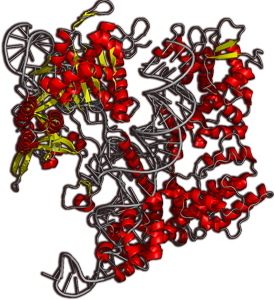
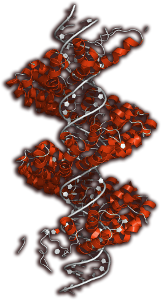
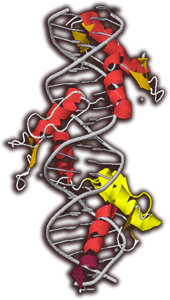
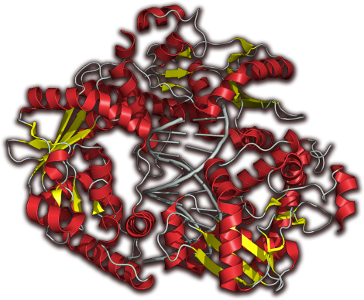
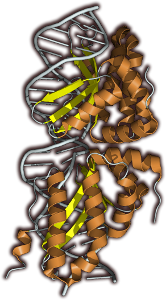
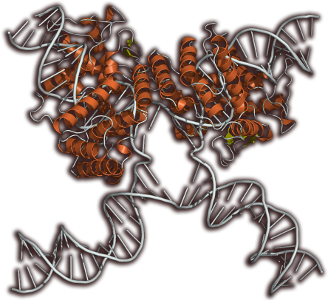
Structures of two kinds of engineerable DNA binding proteins that the CCV is exploring as tools for efficiently engineering sequence changes into human genomes.  Left: A Zinc Finger (ZF) protein. Right: a Transcription Activator-Like (TAL) protein. (More information, References)  The journal Nature Method highlighted the use of ZFs and TALs to edit genomes as Method of the Year 2011 and featured CCV investigator Keith Joung in an accompanying article.

Goals of our Center


A principle aim of the CCV is to make the ability to edit sequences in the human genome so precise and efficient that it will become routine for researchers to determine by direct experimentation exactly what sequences contribute to human cell phenotypes.  Since the completion of the Human Genome Project, our knowledge of the genetic causes of human disease has come mainly from thousands of Genome Wide Association Studies (GWAS).  GWAS can narrow down the locations of disease-associated genetic variations to particular regions of the human genome, but they cannot identify among potentially many DNA variations in a region are actually causative. More recently, by virtue of more comprehensively revealing DNA variation, researchers have found that by sequencing entire human genomes of disease-affected individuals and their close relatives (e.g., PubMed), or by sequencing only the protein coding fractions of their genomes (PubMed), they can identify disease-associated genome locations with single base precision.  But these methods, although an advance over GWAS, also cannot prove that these positions are directly causative.  By improving the ability of researchers to precisely manipulate human sequences, the methods developed by the CCV will fill these gaps and make possible high-throughput assays for the causative impact of natual variations and, ultimately, high-throughput reverse genetic approaches to understanding human cell phenoypes.  The CCV works mainly with well-characterized human cell lines available from the Personal Genome Project, including human induced Pluripotent Stem Cells, with which we can explore the impact of casuative variations in different human tissue types.  As additional aims, the CCV also develops high-throughput methods for in situ analysis of the expression of large numbers of genes in single human cells, and general technology for highly parallel generation of many large DNA constructs.  CCV’s development of methods of efficiently engineering human cells of many cell types to contain designed sequences, and of analyzing individual human cells, will eventually have direct application to disease detection and gene therapy.


Last modified: 1/31/2012 11:42 AM by John Aach